Services
What we move,
and how it’s
handled.
Three categories of clinical material, each with its own handling requirements and its own clock. Below is what we carry, how a run is planned, and what happens between your dock and the receiving desk.
 01 · Blood specimens
01
Blood specimens
The volume work, done with the care of a single critical load.
Most of what moves in clinical diagnostics is a rack of tubes, and most of what goes wrong with it goes wrong quietly: a tube that was not sealed properly, a rack that spent forty minutes on a counter, a specimen that arrived but arrived unusable. We handle specimens as clinical material with a temperature and a stability window, not as packages with an address.
- STAT and same-day pickup
- Called in, picked up from your draw station and moved directly to the receiving lab.
- Scheduled line hauls
- Fixed daily routes for clinics and collection sites that ship to the same reference lab every day.
- Ambient, refrigerated, frozen
- Handled to the storage condition the test requires, with the load kept in that condition for the transit.
- Secure containment
- Sealed primary and secondary containment, tubes upright, load accounted for at both ends.
 02 · Organs & tissue
02
Organs & tissue
Dedicated direct runs. One driver, one case, no stops.
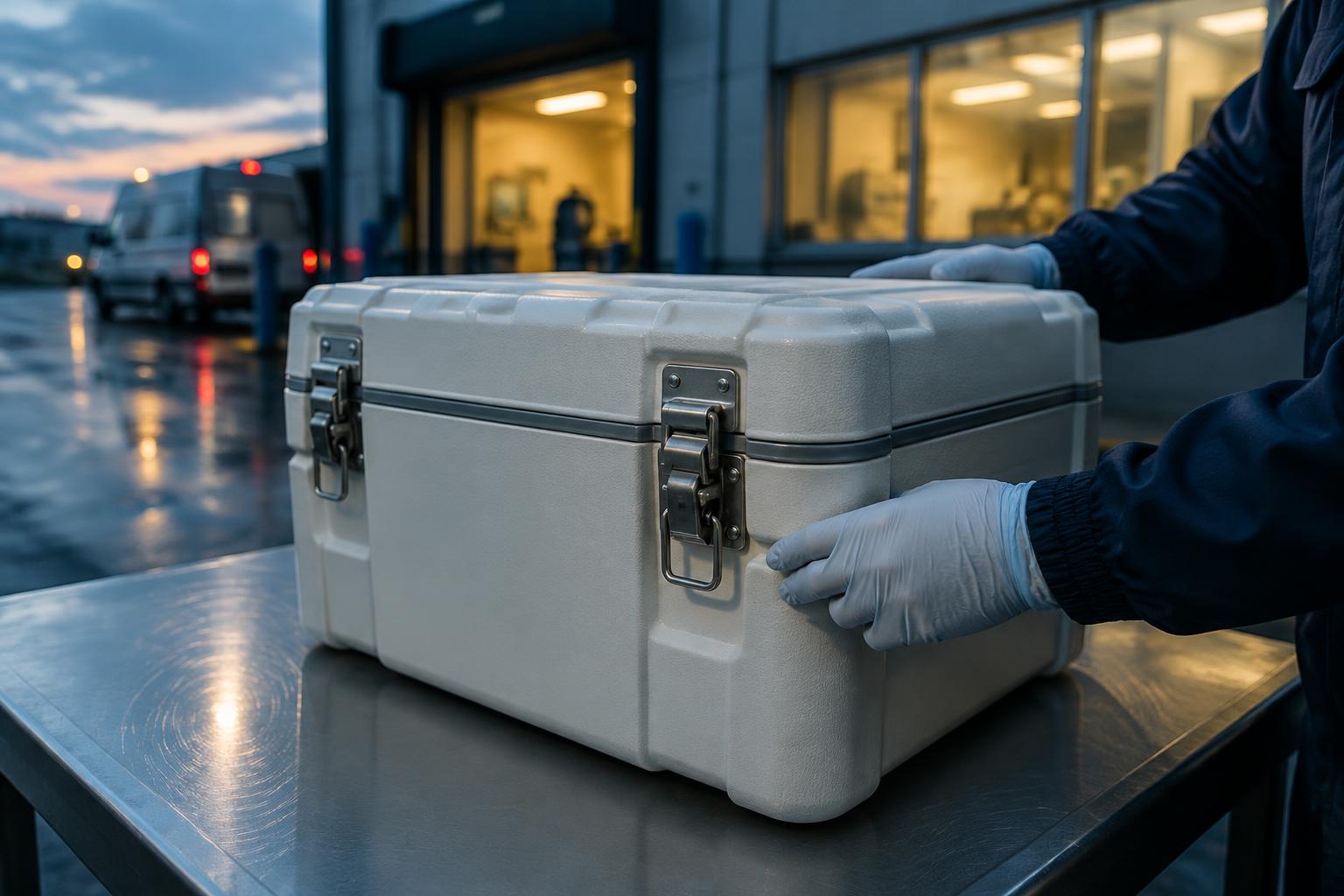
Time-critical organ and tissue movement is a different job from a specimen route. A transplant window does not flex for traffic or for a second pickup on the way. These runs are dispatched as dedicated, direct, point-to-point trips: the case goes into a vehicle that is doing nothing else, and it comes out at the destination.
- Dedicated vehicle
- The run is not combined with other loads. Nothing else shares the vehicle or the schedule.
- Sealed, latched containers
- The transport container is closed and sealed before it leaves the pickup point and stays closed in transit.
- Direct routing
- Straight from origin to destination, planned ahead for the time of day, not routed through a hub.
- Certified, cleared staff
- Handled by certified professionals holding federal clearance certifications.
 03 · Medical supplies
03
Medical supplies
Cold chain stock, clinical consumables and equipment between facilities.
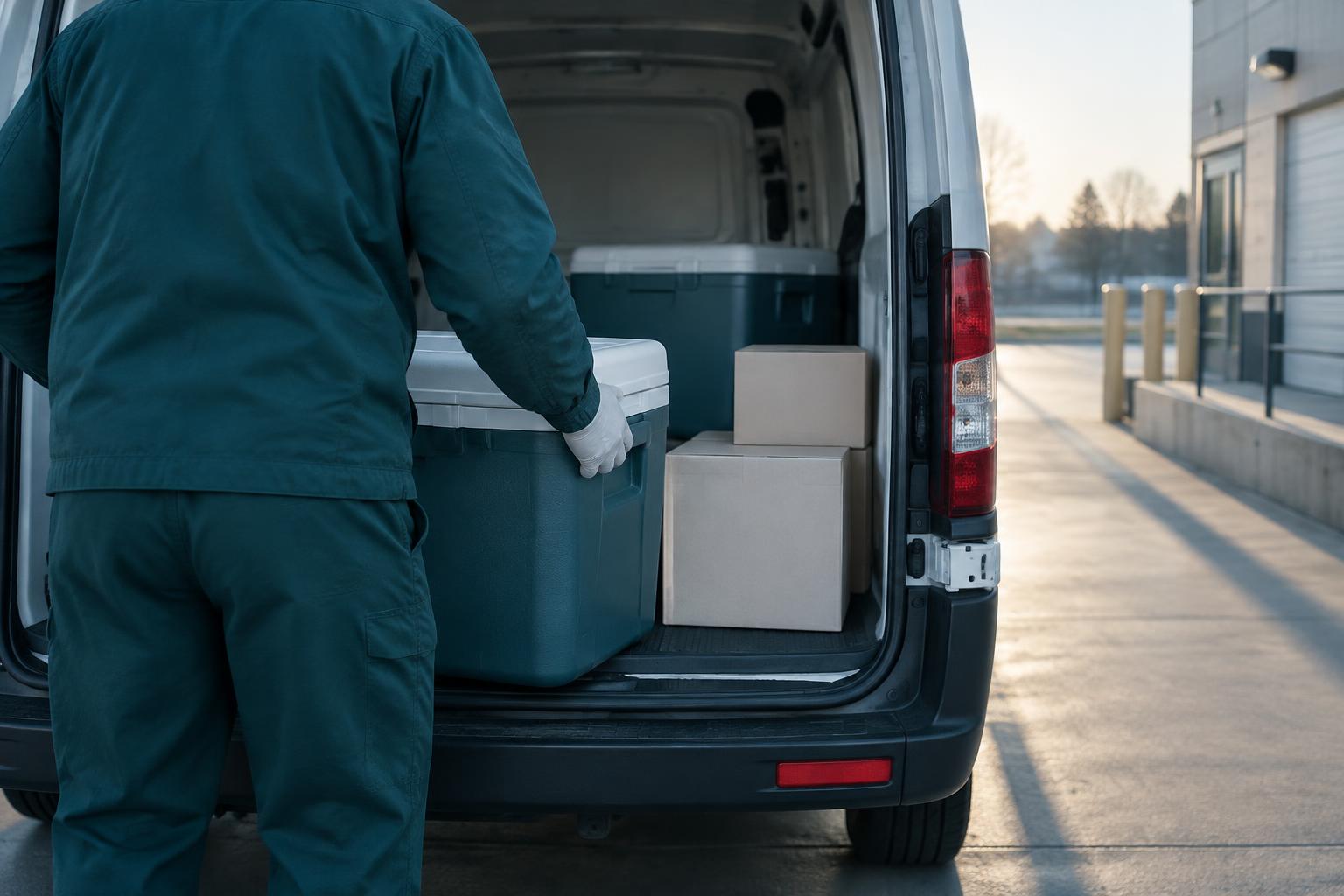
Facilities run short, vendors run late, and departments borrow from each other. We move the stock that keeps a clinic or a lab open: insulated cold chain loads, clinical consumables, and equipment transferred between sites — on a standing schedule or as a one-off the same day.
- Cold chain loads
- Insulated coolers, temperature-sensitive stock moved between facilities without a break in condition.
- Recurring routes
- Standing weekly or daily runs between a supplier, a facility and its departments.
- Facility-to-facility transfer
- One facility to another, including inter-campus moves within a health system.
- Equipment movement
- Small clinical equipment and instruments moved with the handling they need.
The run
Five steps,
every time.
The process is deliberately boring. It looks the same whether you are moving one rack of tubes or a dedicated case across the metro.
- 01
You call or send a request
Tell us what is moving, where it is going, and when it has to be there. A phone call gets you a faster answer on anything urgent.
- 02
We confirm the run
You get confirmation on driver availability and the collection window, so you know when someone is actually coming before you bag the load.
- 03
Pickup, checked and signed
The load is checked against what you described, sealed where required, and signed over at your pickup point.
- 04
Direct to the receiving desk
The run goes straight to the destination. No intermediate stops on a dedicated load, and no waiting on a dock for a route to fill.
- 05
Signed at delivery
The load is handed to a person at the receiving end and signed for, so the record shows who held it at both ends of the trip.